Plant journal
Jacaranda
Picture
Plant some seeds now!
Short Description
Jacaranda is a genus of 49 species of flowering plants in the family Bignoniaceae, native to tropical and subtropical regions of the Americas while cultivated around the world. The generic name is also used as the common name. The species Jacaranda mimosifolia has achieved a cosmopolitan distribution due to introductions, to the extent that it has entered popular culture. It can be found growing wild in Central America, the Caribbean, Spain, Portugal, southern and northern Africa, China, Australia, Rwanda and Cyprus.
Description
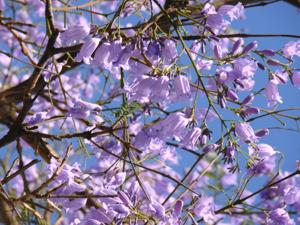
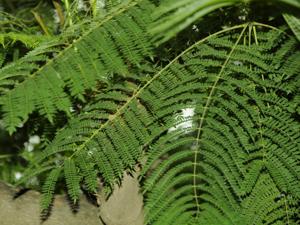
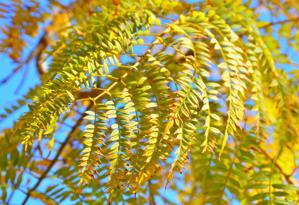
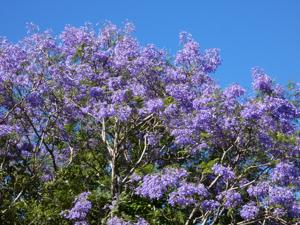
The species are shrubs to large trees ranging in size from 20 to 30 m (66 to 98 ft) tall. The leaves are bipinnate in most species, pinnate or simple in a few species. The flowers are produced in conspicuous large panicles, each flower with a five-lobed blue to purple-blue corolla; a few species have white flowers. The fruit is an oblong to oval flattened capsule containing numerous slender seeds. The genus differs from other genera in the Bignoniaceae in having a staminode that is longer than the stamens, tricolpate pollen, and a chromosome number of 18.
Cultivation
Jacaranda seedling Jacaranda can be propagated from grafting, cuttings, and seeds, though plants grown from seeds take a long time to bloom. Jacaranda grows in well-drained soil and tolerates drought and brief spells of frost and freeze. This genus thrives in full sun and sandy soils, which explains their abundance in warmer climates. Mature plants can survive in colder climates down to −7 °C (19 °F); however, they may not bloom as profusely. Younger plants are more fragile and may not survive in colder climates when temperatures drop below freezing.
External links
You may also like