Plant journal
Corsia
Picture
Plant some seeds now!
Multi-Colored Bachelor's Button
Short Description
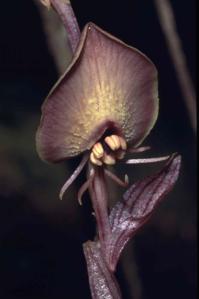
Corsia is a little-studied plant genus from the monocotyledon family Corsiaceae. It was first described in 1877 by Italian naturalist Odoardo Beccari and contains 25 species, all of which lack chlorophyll and parasitize fungi for nutrition. All 25 species are distributed through New Guinea, the Bismarck Archipelago, the Solomon Islands and Queensland, Australia.
Description
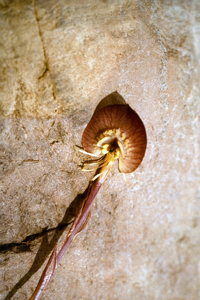
In terms of appearance, the species of Corsia are quite uniform except for the flowers. Chromosome counts are known only from two species: Corsia cornuta and C. clypeata. Both have a diploid number (2n) of 18. Habit Corsia exist largely underground; only the seldom-formed flower stems develop above ground. The fine, thread-like and hairless root system is weakly branched and whitish, spreading widely just beneath the surface. Several hairless, unbranched and upright flowering stems sprout from a rhizome and are visible above ground. They are usually reddish in color and are 10 to 28 cm (3.9 to 11.0 in) high. The xylem is woody and not perforated.
External links
You may also like